How do Bees Make Honey?
Kids love honey as much as they love to ask adults this question -- How do bees make honey?
We will explain this in 5 simple steps:
1. Nectar Collection
Honey bees collect pollen and nectar in the spring when most flowers and plants are in bloom. They use their straw-like tongues (called proboscis) to suck the nectar out of the flowers and they store it in their stomachs and carry it to the beehive.
2. Converting Nectar to Honey
While inside the bee's stomach for about half an hour, the nectar mixes with the proteins and enzymes produced by the bees, converting the nectar into honey.
3. Filling comb with Honey
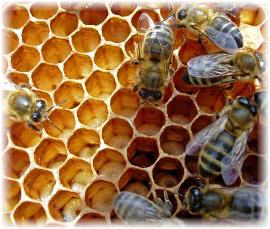 The bees then drop the honey into the beeswax comb, which are hexagonal cells made of wax produced by the bees, and repeat the process until the combs are full.
4. Evaporating Honey
To prepare for long-term storage, the bees fan their wings to evaporate and thicken the honey (note: nectar is 80% water and honey is about 14-18% water).
5. Capping Honey
When this is done, the bees cap the honeycomb with wax and move on to the next empty comb, starting all over again.
So, in a nutshell, the honey we eat is flower nectar that honey bees have collected, regurgitated and dehydrated to enhance its nutritional properties. To find out more about the work of the bees and why busy people are often referred to as busy bees, read: Busy as a bee. The bees also make honey to store it in the hive as food for the winter when there are no blossoms and therefore little nectar available. However, a hive only needs a small portion of honey to survive the winter, meaning that the extra honey can be harvested by beekeepers, who will then remove the honey-filled combs from the beehives and extract the liquid honey for use by first removing the wax cap with a sharp knife or a machine and then placing the bee hive frames in a large centrifuge to get the honey out of the comb. Beekeepers has the choice of reusing the comb by putting it back into the bee hives to be refilled with honey instead of melting it down to make candles. In this way, the bees don't have to re-build the comb and the beekeepers have more honey to sell.
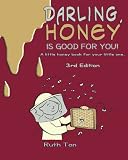 It is always so interesting to explain the question of "how do bees make honey". I have written a full-colour book entitled "Darling, honey is good for you!" which uses very simple language to specially explain to kids (3-6+) what honey is and how honey is made and collected by man. So far I have received many enthusiastic reviews on the book from all over the world. You can go to the webpage on
Honey Bees for Kids to get more details about the book or click on the above book image to go to Amazon and make a purchase.
It is always so interesting to explain the question of "how do bees make honey". I have written a full-colour book entitled "Darling, honey is good for you!" which uses very simple language to specially explain to kids (3-6+) what honey is and how honey is made and collected by man. So far I have received many enthusiastic reviews on the book from all over the world. You can go to the webpage on
Honey Bees for Kids to get more details about the book or click on the above book image to go to Amazon and make a purchase.

'Lectures' on 'How is Honey Made?'
Little 'lectures' and demonstrations by Superbee, in response to the question 'How is Honey Made?' during a group tour in Goldcoast, Australia.
Bee Pictures
Pictures say a thousand words...need I say more.
Enter to view
End of "How do bees make honey?" Back to "20 Amazing Honey Bee Facts"