7 Basic Pure Honey Nutrition Facts and Information
How can we miss these important honey nutrition facts when trying to understand what honey is made of and what honey nutrition benefits there are for us? Here's the information:
1. Simple Carbohydrates
Honey is a great source of simple carbohydrates. Nectar itself is composed mainly of sucrose and water. Bees add enzymes that create additional chemical compounds and a special honey nutrition value, and then converting the sucrose into fructose and glucose, and then evaporate the water so that the resulting product will resist spoiling.
2. Natural Sugar
80% natural sugar - mostly fructose and glucose.
Due to the high level of fructose, honey is sweeter than table sugar.
3. Water content
18% water.
Most beekeepers believe that the less water content the honey has, the better the honey nutrition value.
4. Minerals and Vitamins
2% minerals, vitamins, pollen and protein.
Honey contains natural minerals and vitamins which help the metabolizing of undesirable cholesterol and fatty acid on the organs and tissues into the system, hence preventing obesity and promoting better health for us. The vitamins present in honey are B6, thiamin, niacin, riboflavin, pantothenic acid and certain amino acids. The minerals found in honey include calcium, copper, iron, magnesium, manganese, phosphorus, potassium, sodium and zinc. Manuka honey has a higher than normal conductivity, a way of measuring the mineral content of a honey -- about 4 times that of normal flower honeys. The higher the conductivity, the better in terms of honey honey nutrition benefits.
5. Antioxidants
One of the most encouraging honey nutrition facts - this natural sweetener is rich in phenolic acids and flavonoids, which are a source of natural antioxidants and is free of fat and cholesterol!
6. Calories
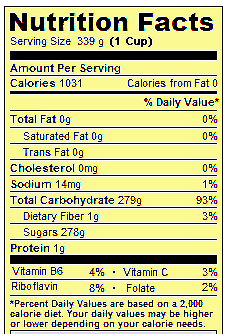
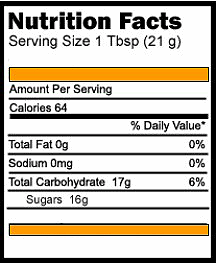
One tablespoon of natural sweetener honey contains 64 calories. How does this honey nutritional information compare with table sugar? Full account in: Amount of Calorie in Honey.
7. Glycemic Index
* Honey has a healthy Glycemic Index (GI), meaning that its sugars can be gradually absorbed into the bloodstream to result in better digestion.We should try to avoid eating excessive high-glycemic foods which would prompt an elevated insulin release in our body as a result of the pancreas being stimulated to metabolize the sudden surge of glucose into the blood.
Honey Nutrition Label - Pure Honey Nutrition Facts (1 TBSP & 1 CUP)
(Source of Charts: NutritionData.com)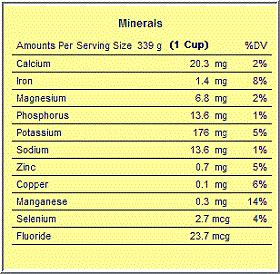
Eat Honey for Energy - More Nutrition Facts About Honey
1. Tine and Tyruss Cramer share theor stories about eating honey for energy and youthfulness: Eat Honey For Energy
2. Why honey is an ideal carbohydrate for pre-exercise, during exercise and post-exercise: Honey Energy Drink
3. Do you wake up exhausted, feel weak or nauseous early in the morning? Your body has possibly produced a stream of undesirable stress hormones while you sleep: Honey Diet for Hibernation
4. Honey hibernation diet lets your child sleep optimally and enjoy great physiological recovery at night for better immunity and energy: Hibernation Honey for Kids
5. Honey sticks are nutritious and energizing treats for the little ones and very convenient to take along on trips: Happy Treats of Honey Sticks
6. Has anyone told you about energy drink side effects? More in: Beware of Energy Drink Side Effects
7. Honey is an excellent energy food: Energy Food and Exercise- Truths Athletes Must Know
8. Struggling with slow metabolism? Read: 10 Stupidest Ways to Make Your Metabolism Sluggish
How Much Honey Can We Eat Daily?
We all know that nothing, however good, when consumed in excess is good. So, how much honey can we eat every day? What is considered too much? Get the answers in About Honey - How much honey can I eat every day?
Can Diabetics Eat Honey?Honey is a "no-no" for diabetics if you ask the doctor. But were you told that honey is a healthier choice in the diabetic diet than table sugar and any other non-nutritive sweeteners?
Other Related Pages on Honey Nutrition Value
1) 11 Most Unbelievable Honey Benefits That Many People Don't Know.
2) Learn useful facts about honey nutrition and composition from:
-Honey Diet Nutrition & Cures Q&A.
3) The latest sleep and weight-loss theory based on the hibernation diet builds a link between eating honey before going to bed and losing weight!
4) The answer to "Why is Honey Good for You?" is manifold and goes beyond our taste buds.
End of "7 Basic Pure Honey Nutrition Facts and Information". Back to "Why is Honey Good for You?"