3 Reasons Why Manuka Honey Benefits are Exceptional
1. Special UMF Antibacterial Properties
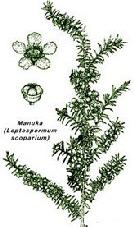
Manuka honey, the Maori name for the New Zealand tea tree/bush Leptospermum scoparium or Leptospermum, is the much prized floral variant that is famous for helping to combat infections and heal wounds. It was first introduced to me many years ago when my sister brought back a few bottles of it from her New Zealand honeymoon trip. And frankly, when she told me that it was "medicine", I wasn't at all thrilled to eat it. (I guess many of us tend to associate the word with the synthetic medicine prescribed by doctors in the clinics.) Many years later, I came to know the honey as the most treasured honey in New Zealand and Australia that has miraculous healing effects.
Unique Manuka Factor or commonly known as UMF is the only worldwide standard in identifying and measuring the antibacterial strength or quality of some strains of Manuka (UMF Honey Association). It is a guarantee that the honey being sold has the special UMF antibacterial property and a UMF rating of 10 is the minimum recognised. Ordinary Manuka has only the hydrogen peroxide antibacterial property which is common to most types of honey, whereas UMF Manuka has both the natural hydrogen peroxide antibacterial property and its own natural UMF antibacterial property, giving it increased antibacterial potency. The UMF property is very stable, unlike the hydrogen peroxide antibacterial property common in most honey which is easily destroyed by heat, light as well as certain enzymes in body serum.
Many different cultures have recognized the potential use of garlic for prevention and treatment of different diseases and have studied its significant antibacterial activity. According to a clinical study published by the Royal Society of Tropical Medicine and Hygiene, Manuka honey exhibited even greater antibacterial activity against extended-spectrum beta-lactamase (ESBL)-producing E. coli than aqueous garlic extract (AGE).
2. Medicinal Honey with Many Healing Capabilities - Manuka Honey Uses
Some of the most common Manuka honey benefits for health and healing include:
1. Gastritis2. Stomach Ulcers
3. Tonsillitis
4. Sinusitis
5. Skin ailments eg eczema, hives, rosacea, rashes
6. Building Body Immunity
7. Facial masks
8. Common Flus, Coughs and Colds
9. Cuts and Burns
UMF Manuka, also known as "Medihoney" in some pharmacies, is the preferred honey for wound dressing and other special therapeutic uses and studies are showing Manuka honey with high levels of UMF could be very effective in helping relieve stomach ulcer symptoms and gastritis, and sore throats, and when applied topically, in assisting the natural cure of skin ulcers, wounds, burns, boils, cracked skin. That is also why many skincare products also contain UMF manuka as a special ingredient and promise positive Mnauka honey benefits from their regular application on the skin.
3. High Honey Conductivity
Another reason why Manuka honey, which is available in most Kiwi homes, is favoured by so many honey fans is that it has a higher than normal conductivity, which is an indirect measurement of mineral content of a honey - about 4 times that of normal flower honeys.
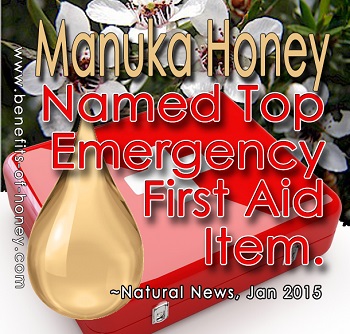
UMF is not found in the nectar of all Manuka flowers, which are known as Leptospermum scoparium and belong to the the Tea Tree bushes found in New Zealand's coastal areas. (To be more accurate here, Manuka is also found in Tasmania, but it has been so successfully marketed and branded by New Zealand producers that most people see it an exclusively Kiwi product.) Some Manuka bushes do not produce honey with the UMF property every year, and the concentrations of UMF can vary from batch to batch and year to year. The reason why only some Manuka honeys have the unique UMF antibacterial property is not yet known. Researchers believe that it could be from a subspecies of Manuka or due to some environmental factor such as soil type.
UMF, NPA, MGO Ratings and Trademarks
There are varying UMF strengths - UMF 10+, UMF12+, MF 15+, UMF 20+, the higher the UMF, the more expensive is the honey. Manuka honey labelled with a registered trademark UMF� by licensed companies are packed into jars with ratings of UMF 5 or more. In the market, you can now find other established certified measurements and trademarks of the extraordinary antibacterial activity in Manuka honey. They are the NPA Label, Non Peroxide Activity and MGO, the Methylglyoxal rating. A bottle of Manuka with an NPA 15+ is assumed to be comparable to UMF 15+, NPA 20+ is comparable to UMF 20+, and so on, whereas Manuka MGO 400 is the equivalent of UMF 10+ and MGO 800 is the equivalent of UMF 20+.
Manuka Honey - How to Use
The taste of Manuka is probably an acquired one; the more you eat it, the more you would be able to appreciate its remarkable depth and the unique unforgetable foresty aroma that stands out amongst the honey varieties. Many find mixing a tablespoon of the honey with warm water or tea helpful in treating a sore throat, cough, cold or flu symptoms, and for countering "heatiness" in the body. I love everything about this honey except its price. I am not sure how easy it is for you to find this honey, but a bottle of Manuka honey with UMF here in Singapore is really expensive - about 10 times or more the price of regular honey! And a pack of 20 Manuka honey and propolis drops/lozenges from New Zealand for soothing the throat costs about 9 Sing dollars (about 6 US dollars).
Warning: According to Dr. Ron Fessenden of The Honey Revolution, daily consumption of Manuka honey is not recommended for those who are diabetic or prediabetic due to its high level of methylglyoxal which could induce complications of diabetes.
Related Pages on Manuka Honey Benefits
1. Did you know that Manuka honey was once classified as a low grade honey and fed to the cattle? Find out more in: Manuka Honey as Medicine.
2. What is the real deal about UMF Manuka honey? My thoughts and take on the subject in UMF Manuka Honey And Its Big Price Tag.
3. Confused by the activity ratings of Manuka UMF, Active, Total Activity, MGO, and NPA? Read: Manuka UMF and Other Activity Terms Explained
.
4. If you are residing in Singapore, visit e-store Bee Healthy and check out the sale of Manuka honey there. Bulk orders prices available too.
End of "3 Reasons Why Manuka Honey Benefits are Exceptional". Back to Exploring Honey Varieties.