4 Bee Wax Uses You Probably Don't Know
Bee wax, also known as beeswax, is a natural secretion from wax glands on the sides of the body of honey bees and is used primarily as a building block for the bees' comb cells in which the young are raised and honey and pollen are stored. To stimulate the production of beeswax, the honey bees feed themselves with honey and huddle together to raise the temperature of the cluster. To produce one pound of wax requires the bees to consume about ten pounds of honey.
Ranges from yellow to almost black, beeswax is extracted by boiling the honeycomb in water and skimming the wax off the top. It has a subtle natural aroma, the fragrance of honey ingrained with the other scents present in a beehive that is often pleasant enough for many honey lovers to just chew like a gum and swallow as a form of roughage.
1. Bee-wax Candles
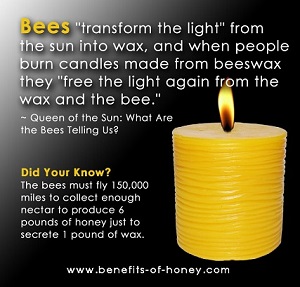
I first came to know about bee wax and its uses when I discovered beeswax tea lights and beeswax candles which burn longer and cleaner than ordinary wax candles. These naturally scented candles made by the bees may seem to be more costly than paraffin candles, but they burn so much more slowly that any price difference is nullified. They also do not drip excessively and are the only fuel to emit negative ions during burning, invigorating the body and cleaning the air of positive ions such as dust, odors, toxins, mold, viruses that are especially harmful to those who suffer from environmental allergies.


2. Popular Ingredient in Cosmetic and Skin Care Products
I later realize that there are actually plentiful products that are made from bee wax, such as beeswax for hair, soap, beeswax for skin care products. Beeswax works well in cosmetic products because of the "wax esthers" that exist in both beeswax and human skin. These compounds help to bind and emulsify ointments, lip balm, lipstick and lotions. As a natural hydrating ingredient that increases skin essential moisture, beeswax is safe to use and commonly found in hand cream and body cream that help retain natural skin moisture and relieve itch from sensitive skin.
3. Ear Candling
In folk medicine, beeswax ear candles are used for ear wax removal. They are believed to be able to heal ear infection and improve hearing by removing the wax inside the ear. Originating from many countries such as China, Czechoslovakia, Mexico and Italy, this ancient art is known as ear candling.
4. Pharmaceuticals and Household Products
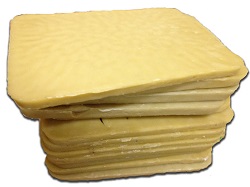
Processed by melting, straining, filtering, centrifuging, bleaching and solidified in various sizes blocks for shipping, beeswax today is widely used in pharmaceuticals, beeswax wood finish, beeswax polish, waterproofing materials, floor and furniture wax, crayons, and light lubricants in manufacturing. It is also popularly used as a coating for pills, sweets, beeswax wrap, and other foods, for instance cheese to protect it as it ages. While some cheese makers have replaced it with plastic, many still use beeswax in order to avoid any unpleasant flavors that may result from plastic.
Other Related Pages:
1. 10 Reasons You Should Switch to Beeswax Candles (#8 is Wow!)
2. How to Make Beeswax Candles
3. Check out handmade beewswax candles in this e-store.
4. Get Beeswax Candle Care Tips
5. Honey Bees and Their Wondrous Products
End of "4 Bee Wax Uses You Probably Don't Know". Back to "Common Terms in the Honey Bees World".