Who Says Cactus Honey Powder is Honey!
I never knew what Cactus Honey Powder is until a few visitors wrote to Benefits of Honey asking about its benefits. A search on this white icing sugar-looking powder in the World Wide Web led me to ask some questions about this sweetener.
Many seem to think that it's a honey varietal from the flowers of cactus that's been processed into powder form for the convenience of use -- 'just scoop and mix it into your coffee and tea like you would use sugar or creamer'. This honey powder is not sold here in Singapore, but many suppliers of honey products in the World Wide Web seem to be carrying this product.
Claimed to be all natural, this honey powder is marketed as all natural, healthy to eat, and an excellent sugar replacement suitable for the diabetic. And it's positioned as a brilliant ingredient for baking or drizzled on cereals, pancakes and waffles. However, I had all these questions in my mind: How can it be a product from the bees when even the lightest-coloured honey cannot be colourless or white? And even if it is really honey, what's the process involved in making honey liquid into powder form? Won't any health benefits be compromised as a result of processing?
Leading consumers to naturally think it's a variety of honey, the name "cactus honey" is a misnomer. Actually, cactus honey powder doesn't come from the bees. It's made from the juice of a Mexico-native cactus plant called Agave. Like maple syrup and cane sugar; its juice after filtering is heated to remove excess water. The liquid form is probably a lot better known – Agave syrup or Agave sweetener, which started to appear on the shelves of health food in the early 2000s. This plant-based sweetener is about 90% fructose, the natural sweetener found in most fruits. And more viscous than honey, Agave syrup is not as aggressive as table sugar in spiking our body blood sugar due to its low-glycemic index.
Would I Eat Cactus Honey Powder?

 When I sent out the above article to Benefits of Honey BuzZStop readers, I was asked if I would eat Cactus Honey Powder. Good question, as I think my stance on this product is really not clear in the article.
Out there, there is a dearth of information on the Cactus Honey Powder benefits and I have yet to find any research findings that advise against its consumption. Hence, I won't reject this "honey powder" with whatever information I have now. In my opinion, it is like most highly processed sweeteners which are useful in enhancing the taste of the food we eat, but not in providing any good nutrition. My only annoyance with this product perhaps has to do with the way it's named and claimed – "natural", "honey", "healthy", which I could hardly make any association with the product.
Actually I am not against eating most foods, including table sugar and other refined sweeteners (except chemical-laden ones, for instance Sucrolose and Aspartame), as long as they do not pose any serious harmful health damage when normally consumed. I am not a purist when it comes to sweeteners; I do occasionally eat ice-cream, enjoy chocolates and the sweet stuff like most ordinary women. When I am out of the house, we all know that most beverages abd desserts prepared and sold in the stalls are sweetened with sugar or corn syrup, and I can live with moderately buying and eating these foods. Nevertheless, everyone knows that everything, including honey, should not be taken excessively. When I am at home, I like to replace empty-calorie sugar with honey in my food and beverages. I use honey as a home remedy for quite a few ailments like cold, cough, sore throat and eat it before I sleep for general good health.


After finding out so much about what honey is, realising how incredibly intelligent this food is, and having personally experienced its health benefits, you just can't help but insist that natural honey must be differentiated from other sweeteners. So, when there is a choice of picking up a sweetener amongst all the sweeteners in the shop, honey would be the natural number one choice.
Ruth Tan
Nov 2009
July 2018 (Updated)
Postscript
On 28 September 2013, a visitor shared a pdf document on honey powder by National Honey Board (see posting submitted below), United States. According to that link, dried honey formulations typically contain 50% honey and other commonly added ingredients include "corn syrup, high fructose corn syrup, maltodextrins, non-nutritive sweeteners, sugar, sugar syrup, processing aids, drying aids, bulking agents, anticaking agents such as calcium stearate, bran, dextrins, lecithin, soy flour, wheat starch." Wow, that was a long string of additives which certainly helped me to form a firm opinion that honey powder should not be called a form of honey, next to liquid honey and creamed honey.
Related Page
Read more on: What in the World is Honey Powder?
Note: Please give your posting some time to be moderated. Only posts relevant to the topic will be published on this page. Postings are not made to work automatically due to spamming concerns.
Postings on "Cactus Honey Powder"

I wrote to the distributors...this is what they wrote me back. 07/17
"We finally received a reply from the manufacturer, but unfortunately they would not share the exact breakdown of their ingredients. They insisted that the ingredient list on the product is correct, however, they do not recommend the product for diabetics."
Polly Munoz, United States
19 June, 2017
Great article, thanks for posting.
Grace, Canada
18 Sep, 2016
Kick out this shameful fake honey powder. This product is sugar cane syrup powder. It is fraud and crime. Intake this is dangerous to diabetics.
Sung Oh, United States
16 Apr, 2016
As a T2 diabetic, I was quite interested in agave. However it also has a laxative effect, even in small amounts, for some people. Care must be taken in coffee shops that put out containers of honey because it could be agave honey and not bee honey. On the other hand, if constipated, it's an easy medication to take. Just add to coffee and you're good to go.
Emma, United States
12 Feb, 2015
I have purchased but not yet used EVERGREEN HONEY POWDER, distributed by Rhee Bros. Inc. I thought that these tiny tan beads were honey with the moisture removed. Now reading the label more closely the small print on the side says, "Evergreen Cactus Honey Powder originates from the carefully chosen cactus blossoms that flower in the deserts of the American Southwest. Now for your convenience, the goodness of the honey has been preserved into a powder form. Take it anywhere and enjoy." Small print on other side of jar says Honey, Sucrose. This product contains sugars and sodium. I really, really thought that I had purchased a natural honey! Is this a healthy product?
Rose Gary, United States
3 Oct 2013
Ruth: Hi Rose, I've never tried this honey powder, but you may want to know that honey powder does contain other ingredients (such as corn syrup, maltodextrins, starch) other than honey.
More info here. http://www.honey.com/images/uploads/general/driedhoney.pdf
Ronald Dawdy, United States
28 Sep 2013
Ruth: Thank you, Ronald! This confirms that most or all commercial dried honey products do contain other ingredients.
Hi, I have read your article my question is that you mean cactus honey powder is not original honey and also those who are diabetes patients can you use it as a sweetener please I need doctors' advice on it because I started using it but now I am confused about cactus honey powder.
Aliyu, Abubakar Darma, Nigeria
1 Sep 2013
Ruth: As mentioned in our article, cactus honey powder is actually made of agave juice. Noted that you require doctors' advice and would like to know if agave would be suitable for diabetic patients. Sorry, we are no medical doctor to give you the advice, do check with your doctor.
When answering the question, Honey comes liquid, Cream and powdered forms, Fact or Myth? The correct answere to the quiz was "Myth". I buy Granulated Honey at a store in Napa, Ca. called Whole Spice and I've seen it eleswhere in single packets. This is an FYI response. As far as I see it it does come in a powdered form.
Erik Springe, United States
10 Apr 2013
Ruth: Personally I find it hard to see honey powder as a form of honey as it contains one or two additives such as wheat starch, maltodextrin. These additives can form up to 50% of a honey powder product, so it will be misleading to label honey powder as one form of honey, like creamed honey, liquid honey, which are expected to be 100% honey.
Things must vary from Product to Product.
On the back of the package for Arizona Cactus Honey Powder, in bold letter under ingredients it stats these two and only two items. in order:
PURE HONEY
Maltodextrin
Maltodextrin is a common additive and is an easily digestible carbohydrate made from rice, corn, or potato starch (But beware - it can also be derived from barley or wheat). It's made by cooking down the starch, and then acid and/or enzymes break the starch down even further.
Matt Sharpe, United States
26 Mar 2013
Ruth: When maltodextrin is further processed/hydrolyzed, it becomes corn syrup, another very common additive. The Glycemic Index of maltodextrin can be as high as 135 (compared to honey, 55). It's origin may be from corn, but it's a highly processed sugar which can cause blood-sugar peaks and make one feel hungry after one just ate.
Cactus honey powder is great to take traveling. It comes in a nicely sealed pouch, easy to carry and does extremely well in hot, tropical climates. Unlike sugar, which would get all syrupy, honey powder maintains its texture and flavor for cereals, tea, or any other food needing some sweetener. I highly recommend cactus honey powder.
My Arizona Brand Cactus Honey Powder ingredients are: pure honey, and maltadextrin. That's it! Hope you enjoy it as much as I do. I took it to Ghana with me last summer and I used it for a full three months with no problems whatsoever. It stayed in it's granule form with no syrupy mess at all. My friends in Ghana really enjoyed it on their cereal too. So I sent them a few bags. They also enjoyed it in their tea.
Maradee Lee, United States
20 Jan 2013
Ruth: Hi Maradee, I understand the convenience of granules with no syrupy mess. But I will give this a miss as it contains maltadextrin, which could be worse than table sugar. I also guess for this powder, the proportion of maltedextrin is a lot bigger than that of honey.
I have been using this cactus honey powder sold in a large chain of Korean markets called H-Mart. The company is called Arizona Farm Cactus Honey Powder. The key word here is honey. Does this mean that the USDA allows companies to lie to its consumers and call this dehydrated agave juice "HONEY"? If I knew this, I would have purchased raw sugar cane juice powder, which is rich in nutrients too. I cannot seem to find a website for Arizona Farm. If I have been consuming fake honey, I will bash this company and the USDA on my weekly Internet talk show. Just Google progressive discussions, megalife21.
James Madonna, United States
16 Dec 2012
I'm pretty sure the company is not dumb enough to put "honey" on the label when it does not actually contain honey (that's against the law). My parents have been using the cactus honey powder for years and I have to say, I love their product!
Jeremiah, United States
13 Dec 2012
Ruth: I'm not sure how much honey is in there, but if there is any, I hope someone can tell us something about the process involved in reducing golden honey liquid into just sweet white powder. If the processing does cause all the nutrients of honey to disappear, the manufacturers who are claiming the good health benefits are definitely smart enough not to say anything.
Tried it! And have been using it since. Hard to find here in Hawaii and when you do find it, it is very expensive! Tell me where I can find?
Carol Ventura, United States6 Sep 2012
I can attest, living in a desert with a company that makes it, that "cactus honey" is real. It's reddish brown and has a brown sugar and clover taste. This, however, is not cactus honey and it rather upsets me that they not only take the name 'honey' for their product but also a honey type that might not be very well known, but is very good, especially on cornbread. I do not recommend buying this product but actually taking time to look for the real stuff, thank you.
Seirra Zen, United States
6 Sep 2012
When I first purchased Cactus Honey Powder made by Hibee, it clearly stated on the package it was made from Agave. Which was fine with me. In fact when I called the company, they confirmed that the powder was agave from Mexico, guaranteed. Now, the same package says a different story. It says the only ingredient is organic honey! This is confusing. I will stop to buy this dubious product as it seems bogus.
Summer blossom and Buckwheat honey are not honeys? Whoa! I just cant fathom that, can the poster (Ron Dawdy, United States) explain this please?
Troy, Canada
4 Aug 2012
I have been using Cactus Gold Honey Powder for a few years now. I found it in a Oriental store. It has helped me not use sugar for some time. It is great for Diabetics and it doesn't change the taste of the food like other sugar substitutes do. I use it mostly to drink tea and will continue to us it.
Leon, United States
24 Jun 2012
I just bought "Cactus Honey Powder" but it says on the label that has Maltodextrin but it does not say how much of each. I notice that it does not taste like honey - I used it in a lemonade and it does work like the honey itself, it takes a lot of sugar to sweeten it. Does anyone know why is that and what percentage of of the Maltodextrin has. Thank you
Concerned Grandmother
Irma, United States
14 May 2012
Ruth: Sorry Irma, I've no idea how much of Maltodextrin is in there. So far I've seen as much as 40% maltodextrin being indicated on the labels for these sweeteners, but would advise avoiding these sweeteners containing maltodextrin.
We love Evergreen Cactus Powdered Honey...but we can't find it anywhere.
Mark, United States
12 Apr 2012
The Price of Raw Honey here has gone ridiculously through the roof $37.00 for 1 gal if I purchase 55 gal drum not worth it. The drum in the photo looks recycled I have quit making Mead and started using Sugar Cane juice. My friends like it better.
Ronald Dawdy, United States
10 Jan 2012
Thank you for your page on "honey powder". It is a new ingredient to me. As a beekeeper, it is hard to keep up with all the alterations and abominations around honey and bees these days. After learning about the levels of adulteration in branded honeys in the USA, I can only urge you to find a local beekeeper and to purchase local honey.
Tina, United States
7 Jan 2012
So in your applying thinking CLOVER, WILDFLOWER, ORANGE BLOSSOM, BUCKWHEAT, ALFALFA and such Honeys are not Honey either. I have had several brands of Cactus Honey powder and none of them were white powder, all were a yellow granuals of different size. They do not heat the honey they do the opposite they freeze it -20 or lower and draw out the water with vacuum (lyophilisation, lyophilization or cryodesiccation) in 2005 they invented a proses called FAD (Active Freeze Dryer tm) for bulk production. You never know if Honey has been exposed to Poisons that the Bee may have been in and not died from. At least in the desert you are far away from most of that.
Ron Dawdy, United States
12 Nov 2011
Ruth: I can't put a finger on how my thinking on Cactus Honey Powder can be applied to conclude that the rest of the honey types are not honey. I am also puzzled why people would settle for the powder, process and extract the precious moisture out of honey to obtain the powder form when one could just eat the most original, full goodness or even direct from the comb. I can understand that there might be a convenience factor (e,g in baking), but to see the golden liquid form and the while/yellow powder as equals in terms of health benefits, I find it too incredulous. Also, where/what is the link between farming honey out of the pollution free desert and producing it in the powder form?
Hi,
Regarding Cactus Honey..
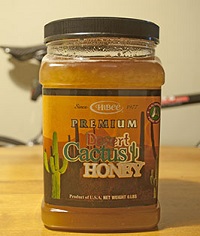
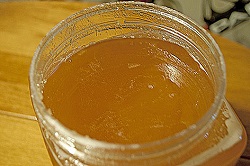
I've recently bought some "Premium Desert Cactus Honey" from Hibee and this isn't in a powder form.
It crystallizes and it takes a while to break down with hot water when used in teas. Is this the same thing as the powder ?
Kevin, United States
24 Aug 2011
Ruth: Kevin, so far I've only seen Cactus Honey in the powder form. This brand also carries the powder form. I'm still very doubtful about its source. I suppose the ingredients label says just "pure cactus honey" and nothing else? The fact that it is so difficult to find out more what cactus honey is exactly made of from the world wide web makes me even more sceptical about it.
Taste great, still not sure what it's made from. I use agave and this does not taste the same.
Janice Samuda, United States
31 Aug 2011
Can you please provide me with the brand name of the "Cactus Sugar" bought from the Korean store. Thank you.
Anita Ong, Canada
30 Aug 2011
I, too, found "CactusI Honey" at the Korean market. And I can attest that Koreans do use it regularly as a sweetener (my friend was able to identify it just from the smell without me mentioning what it was).
I do not like that they have hijacked the word 'honey' when in fact it is from the Agave plant.
I wonder if it is more like the agave equivalent of what evaporated cane juice is to cane juice or more like table sugar compared to cane juice (i.e. is it highly refined to a pure sugar or just evaporated to remove the water). That is a big difference, and I have yet to find any comments anywhere as to which it is more like.
As to the Maltose in the product sold, I suspect it is a very small percentage of the total weight. Maltose is used as an anti-clumping agent. I don't think there's anything surreptitious for inclusion in the package. And my cactus honey is not clumped, so I guess the maltose is doing it's job.
Gee Dee, United States
30 Jul 2011
Ruth: Hi Gee Dee, I'm not too sure about the maltose content of cactus honey powder in particular, but I've come across honey powder whose content label says as much as 40% maltodextrin.
I was so happy to use the package of "Honey Powder made with "Pure Honey and Maltodextrin"", until I looked up what maltodextrin really meant. And, I still am unsure if anyone really knows what it means or what the true side-effects of consuming it could be.
D.M Alexander-Guerrier, United States
9 Jun 2011
Thank you Ruth! I'm glad that I learned this now. I'll stick to locally made organic Raw Honey from now on.
Dona, United States
8 Jun 2011
I also buy Cactus Honey Powder from a Korean Grocery store. It is not a powdery white substance, it is light yellow and has the consistency of small granules. The ingredients listed are "Pure Honey & Malodextrin." So is this Agave or Honey? Either way I like it and figure it is better than white refined sugar.
Dona, United States
31 May 2011
Ruth: It is likely to be a dried version of the agave nectar. Maltodextrin is corn syrup, which has been reportedly linked to side effects such as high cholesterol and weight gain. Anything that has been added corn syrup is far from being a good sweetener.
I was at a Korean store and found a bag of Cactus Honey powder and purchased it. I am very happy with it. I like my tea sweet and I am having a problem with eating to much sweet items. It doesn't add a different taste to the tea and it is a mellow sweet. I will purchase it from now on. Other sweetners, other than sugar, I don't like the extra taste they add. It is actually cheaper than other substitute sweetners. I recommend it.
Leon Vigil, United States
17 Apr 2011
Ruth: The problem is deciding goodness based on taste alone can lead to many sorry stories.
I saw honey cactus powder at the stores. And guess what was right next to it made by the same company? Cactus Honey in liquid form. Looked like real honey to me, with beeswax and all. So I think this website is a bit misinformed.
Susan Jevar, United States
2 Mar 2011
Ruth: Any honey in powder form has all the moisture removed, is highly processed and also has other stuff added to it. The end-result is far from what we know as the natural liquid called bee's honey. Unless marketers become 100% transparent in writing food labels and list every ingredient in their so-called honey products, consumers will have to continue to make guesses about many of these foods they choose to eat.
Don't know who to believe. You say its agave but according to the USDA its honey from a cactus plant.
James, United States
24 Feb 2011
Further to my thoughts posted above, I am reading confusing and conflicting reports about the Agave Sweeteners.
To date I cannot confirm that the Mexican Beekeepers are in fact now or traditionally putting their bees to work on the agave flowers. However, I do read the word 'nectar' often enough in reports on the production of these products. Suffice it to say, I am very suspicious of there emerging many ways to create and present the products of the agave plant. The world is critically short of sweeteners now, and managing a population undergoing sugar withdrawal would not be an easy task, so be prepared for every contrivance available to humankind when it comes to keeping us sweetened up.
More Questions and questionable indications:
How much actually bee collected nectar would it take to make "honey" out of a beehive located near an agave plantation, when the bees were possibly also being supplementally fed on factory derived agave syrup? And how many combinations of bee collected honey with factory derived syrups could they invent? Is the naturally occurring nectar in the flower (if in fact the agave does secrete nectar as many cactus varieties do)the one referred to when they speak of 'nectar' or is this word simply referring to the sweet juice that results from the conversion of the starch derived from the cactus leaves though mechanical and chemical means? I suspect I was misguided by earlier reports I read that the Agave Products were from the flower. A small portion could well be, whether gathered by bees or simply by harvesting the whole plant when it was in flower. One thing is certain, if ever there was a time suited to a maximum amount of cheating by food producers, it must be now. Food is in big demand, governmental controls are mostly aimed at protecting the food chain from outages, meaning there will be little quality control or policing of large producers, and there is so much confusing evidence about, the general public are simply not fully aware of the many tricks and naming games that are going on.
Dr. Fessenden sure did sum it up well, when he said, "Buy your honey from someone you trust!"
One writer said, "I don't know who to believe now!" This is so true for many of us. I prefer to stick with the time honoured ways, and there is none more ancient nor more revered than natural honey!
Cheers, JohnS
John Smith, Australia
8 July 2010
Your sentiments almost exactly match my own. I had no knowledge of the exact nature of that product, however, so thanks for the research you have done and for sharing your findings with the rest of us.
Natural honey from flowers and bees has yet to be powdered successfully, as I gather you fully understand. Honey attracts moisture from the air, which explains why it is not suited to making biscuits (cookies?)that need to remain dry and crisp, but is great for things like cake, which are meant to remain moist. Efforts to powder honey can create something of a product, none the less. However, once exposed to air, it will commence immediately to soften, adhere and go all sticky as it draws moisture in. Who knows but what someone will soon invent a way to remove this hygroscopic feature from honey, which would then release it for powdering. At what cost this would be to its quality would be a worry.
Good Luck to Powdered Cactus Sweetener! I too wish they would not further confuse the public about what is meant by the word HONEY. But as far as promoting health is concerned, perhaps they could be doing the world a favour. I am more concerned about the 90% Fructose you mentioned than any other aspect of the product. I believe (as per Mike McInnes) that fructose would be overdosed at that rate. However, if judiciously mixed with some form of natural glucose, it could be an acceptable sweetener, for the simple reason that the fructose is naturally produced. I do believe though, that as the cactus is a sun-loving plant, the cactus sweetener would possibly overstimulate the liver function and lead to burn-out.
To my notion, all these starch derived manufactured syrups are suspect, so would not suggest mixing with commercial glucose. All these modern syrups are derived through the use of chemically produced (+ electrolysis) hydrochloric acid. Herein lies their great shortcoming, in my opinion. All that 'rough' hydrochloric acid going into the liver, which is itself a source of hydrochloric acid cannot be good.
We have a product on the market here in Australia called "Powdered Honey." It is probably similar in many practical ways to the cactus product. However, it is a complete lie. Well, who can be sure, but 99% anyway! The ingredients label reads, "Maltodextrin, 100% Australian Honey."
For starters, if it were honey no ingredient label would be required. So with only two ingredients in it, the law specifies that the one with the highest percentage be put first. So I read it thus, "Maltodetrin 99%, Local honey, 1%." We have a factory in my city (and I worked there for 5 years), which produces maltodextrin (a low conversion syrup from wheat starch), and it is produced in both liquid and powdered form.
The powdered "honey" as described above, looks cheap beside a bottle of real honey, as the powder is fluffy and the bottle contains a lot of air, so it makes a very profitable product indeed to merchandise.
As desperately as I would like to see everyone using honey, there is simply not enough to go around, and it would take such massive lead times and special emphasis to produce adequate honey, I am glad other natural sugars are entering the market. Cane sugar itself is starting to look like a "health food" when compared to this HFCS. A paradigm shift to honey (by the masses) would be catastrophic unless we had fifty years in which to effect it. Even then, it would require the banning of most pesticides and all sorts of major changes in food production, to the extent that mankind as we know him would probably starve to death before the changeover was complete. Pandemic will probably resolve the overpopulation problem first.
Only yesterday I was photographing a lovely flower of the Prickly Pear Cactus. It fed my bees beautifully last year, and this first flower is giving me hope for survival this season. Unfortunately no major crop has come my way from this source, although in earlier times straight line cactus honey was produced. In Arizona, USA, we once produced small crops off the flowering cacti. Just what the specific nature of this honey might be in the medicinal sense is not known to me. All honey is good honey, however, ............. with which I believe you will agree.
John Smith, Australia
3 Nov 2009
